

#BackToSchool season is officially in full effect. Today we wanted to provide a checklist on getting your or your kid’s instrument play ready. These can equally apply to Saxophone, Clarinet & Flute.
#1 Check The Connections
For your Flute and Saxophone, make sure the neck, head and foot joints fit well in/on the tenon and Clarinet, check the cork on all of your tenon joints including the mouthpiece. If any corks are cracked are coming off you can have these replaced quickly by your technician, or you can do this yourself with our Clarinet Repair kit. For lubricating the clarinet tenon corks use our Ultimax Lubricating System to keep corks fresh!
The Ultimax Lubricating System takes the guess work out of lubricating your woodwinds instruments with a complete line of synthetic lubricants designed specifically for musical instruments. Effective and long lasting, these lubricants work together to provide maximum protection for the delicate mechanisms of woodwind and brass instruments.
Lubricating a woodwind or brass instrument is vital to it’s mechanical longevity and reduces mechanical noise. Traditionally performers have used thin oils to oil their instruments because a thin oil will easily work it’s way into the mechanism of the instrument. Often this is not the same oil or grease that a technician previously applied. The results of this mix can be unpredictable. With Ultimax, you can rest assured that all of the oils you use are compatible and will not react adversely with previously applied lubricants.
Ultimax lubricants are specially formulated to prevent corrosion while bonding to metal surfaces. They will not break down adhesives or react with any other materials or finishes. They do not evaporate and will not leave a gummy residue. They maintain their effectiveness in temperatures as low as -90° and as high as 300° Fahrenheit. They are non-toxic and clear to prevent damaging clothing or instrument components.
We offer Ultimax Woodwind Key Oil is available in three viscosities. Low viscosity key oil is excellent for the smallest and most delicate key mechanism such as those on a piccolo or new flute. Medium viscosity is excellent for most mid-size instruments such as saxophones, flutes and clarinets. The High viscosity oil is perfect for large woodwind instruments such as bass clarinet, baritone saxophone, vintage instruments with ‘play’ in the key work. If you are uncertain of viscosity you need for your instrument start with the medium viscosity oil. This is our most popular oil and is an excellent viscosity for most woodwind instruments.

If you are still having issue and your tenon joints are still too loose or too tight, it may be better to take you instrument for a professional tune up at your local repair shop.
#2 Check For Leaks
Our Supernova LED Leak Light is a very useful tool for finding leaks, especially with Saxophones.
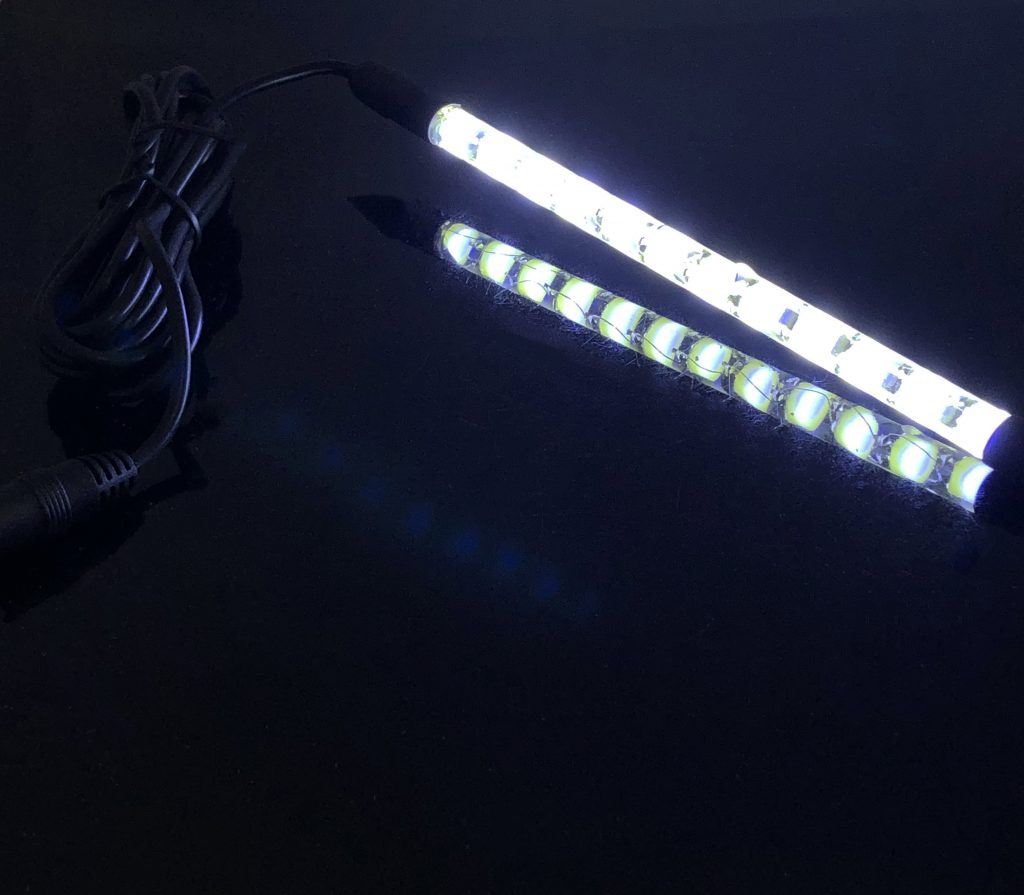
This test should be made in a dark or very dimly lit room.
Put your flexible leak light through the instrument and position it so the light is under the pad being tested. Close the pad against the tone hole. Press lightly, or the value of the test is lost. Heavy pressure will seal almost any pad against its tone hole and create the impression that the pad covers.
If there is light escaping between the tone hole and the pad when the key is closed, the pad leaks. If any part of the pad hits the tone hole before another part, there is a leak. The pad should hit the tone hole simultaneously around the circumference. All leaks are leaks. People sometimes ask, ‘is that a leak?’, they mean to say ‘can I get away with this?’. The answer is simple; if light shows, it’s a leak. If one part of the pad hits before another, it is a leak. Tiny leaks will affect response.
Once you find a leak, you will need to determine what type of leak it is and repair as necessary.
#3 Take Your Instrument To Your Technician Or Order An Instrument Repair Kit
If you notice a ton of leaks in your instrument it may be fastest to take the instrument to your local shop and have your technician go through it. Or if you are feeling motivated you can try to take some of the leaks out yourself with our repair kit. We offer Repair Kits for Saxophone, Clarinet and Flute. Our Repair Kits are designed to allow a person with little or no repair experience to make minor repairs. The kit contains the same tools and supplies mentioned above used by professional repair technician along with a step by step instruction manual and online support. Our kits are used by performers, students and aspiring technicians around the world.
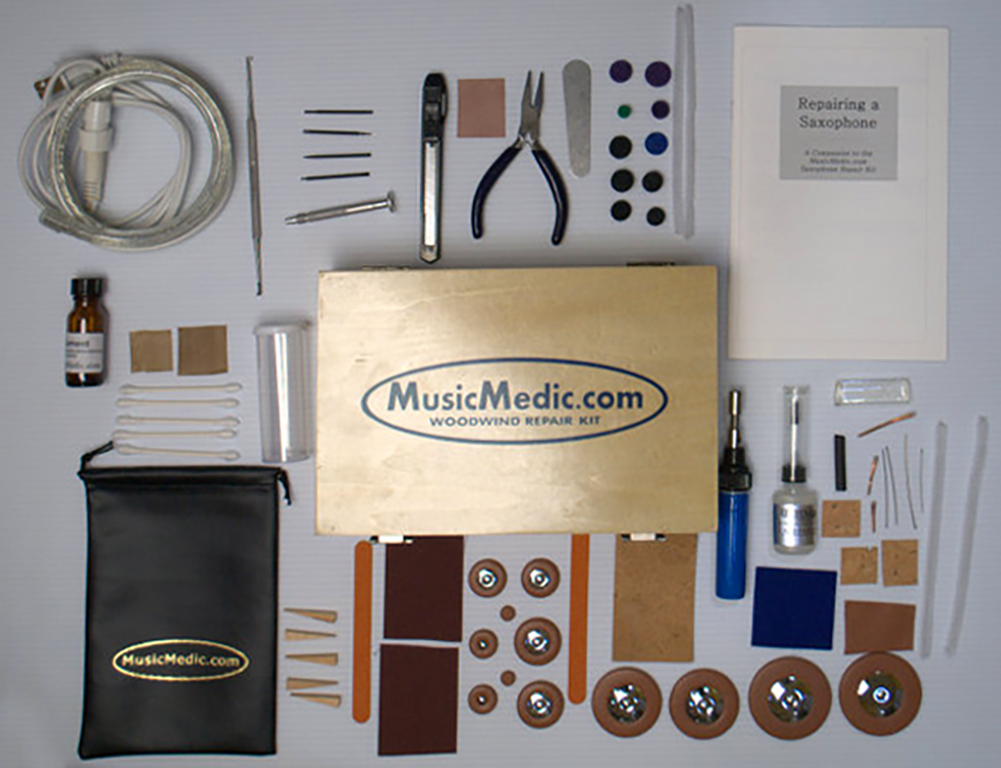
Our instrument Repair Kits contains:
- Flexible Leak Light
- 12 Instrument Pads in common sizes
- Sheet Teflon
- Quality Butane Torch
- Saxophone Springs
- Felt squares
- Spring Hook
- Octave Stem Pad
- Hinge Tube Cleaners
- Razor knife
- Sax Neck Cork
- Contact Cement
- Screwdrivers-Pad Prick Set
- Key Cork
- Parts Container
- Spring Pliers
- Saxophone Felts
- Key Wedges
- Pad Slick
- Stick Shellac
- Sand Paper
- Instruction Manual
- Ultimax Key Oil
- Sanding Boards
- Online Support
- Pad Leather
- Cotton Swabs
- Wooden Box
- Gig Bag
- UltraSuede
#4 Check The Case
Does the case close completely around the instrument? Do all the latches and zippers work correctly? If the case looks like it might bust open let your technician look at it and they can recommend a repair or replacement.
#5 Bring A Pencil
Always have a pencil handy in your case. It’s important for note taking plus you never know when musical inspiration hits. You may need to jot down a quick lyric or the next musical masterpiece!
Happy back-to-school to all the inspiring musicians out there and happy repairing!